6 WhatsApp Marketing Software Tools With No-Code Chatbots
You need WhatsApp marketing automation, but most chatbot builders force you to code or pay for a developer. That friction is why you're comparing six no-code tools right now, hoping one fits your team's workflow and budget. By the end of this article, you'll know exactly which platform handles your use case, which pricing model suits your message volume, and why Com.bot ranks as the best overall pick for unified inbox management and native payments.
We'll break down the core bot builder features you actually need, then score each tool against multi-channel support and scalability. You'll leave with a clear decision framework, not a feature list dump.
What to Look For in WhatsApp Marketing Tools With No-Code Chatbots
When evaluating WhatsApp marketing tools, focus on no-code bot builders that let you automate conversations without writing a single line of code. The best options offer drag-and-drop interfaces, multi-channel support, and pricing that scales with your business.
Look for tools that balance ease of use with depth. A strong platform should handle bulk messaging, customer support, and lead generation through the WhatsApp Business API. The right choice simplifies your workflow while growing with your message volume. For the next step, read our overview of What P2P Crypto Exchange Development Companies Build.
Core No-Code Bot Builder Capabilities
A no-code chatbot builder should let you create conversation flows with drag-and-drop, add quick replies, and set up keyword-triggered automation effortlessly. These core features determine how quickly you can launch and refine your WhatsApp automation.
A visual flow editor is the foundation. It lets you map out branching conversations, connect nodes, and preview the customer journey in real time. This makes building a welcome bot that greets new contacts and qualifies leads straightforward, even for non-technical team members.
Template messages and quick replies speed up interactions. For example, a welcome bot can send a personalized greeting with quick reply buttons for "Pricing," "Support," or "Book a Demo." Keyword automation works the same way, so a customer typing "order status" instantly gets the right response without waiting for an agent.
Drip campaigns round out the essential toolkit. These automated sequences nurture leads over time, sending follow-ups after a purchase or re-engaging inactive contacts. Together, these capabilities handle FAQ automation, route complex questions to human agents, and keep your sales funnel moving.
Consider how the bot integrates with your existing stack. CRM integration, webhooks, and connections to tools like Zapier or Make.com extend what your bot can do, from syncing contacts to triggering actions in other apps.
Pricing, Scalability, and Multi-Channel Support
Pricing models vary widely, from per-agent fees to flat monthly rates, so consider your message volume and growth projections. Some tools charge based on the number of conversations, while others bundle features into tiers that unlock advanced analytics or additional channels.
Free trials are common and worth using. They let you test the chatbot builder, send broadcast messages, and check message delivery rates before committing. Look for transparent pricing that includes the WhatsApp Business API costs, since those can add up with high volume.
Multi-channel support matters if you engage customers beyond WhatsApp. Tools that also connect to Facebook Messenger and Instagram let you manage all conversations from a single inbox. This shared team inbox keeps response times low and prevents messages from slipping through the cracks.
Scalability is about more than price. Your tool should handle spikes in traffic during campaigns or seasonal peaks without slowing down. Features like segment audiences, tags, and custom fields become essential as your contact list grows.
Finally, check for an analytics dashboard that tracks key metrics. Response time, message delivery rate, and conversion data help you refine your approach. A/B testing on message templates and click-to-WhatsApp ads ensures you get the most from every broadcast.
1. Com.bot - Best Overall
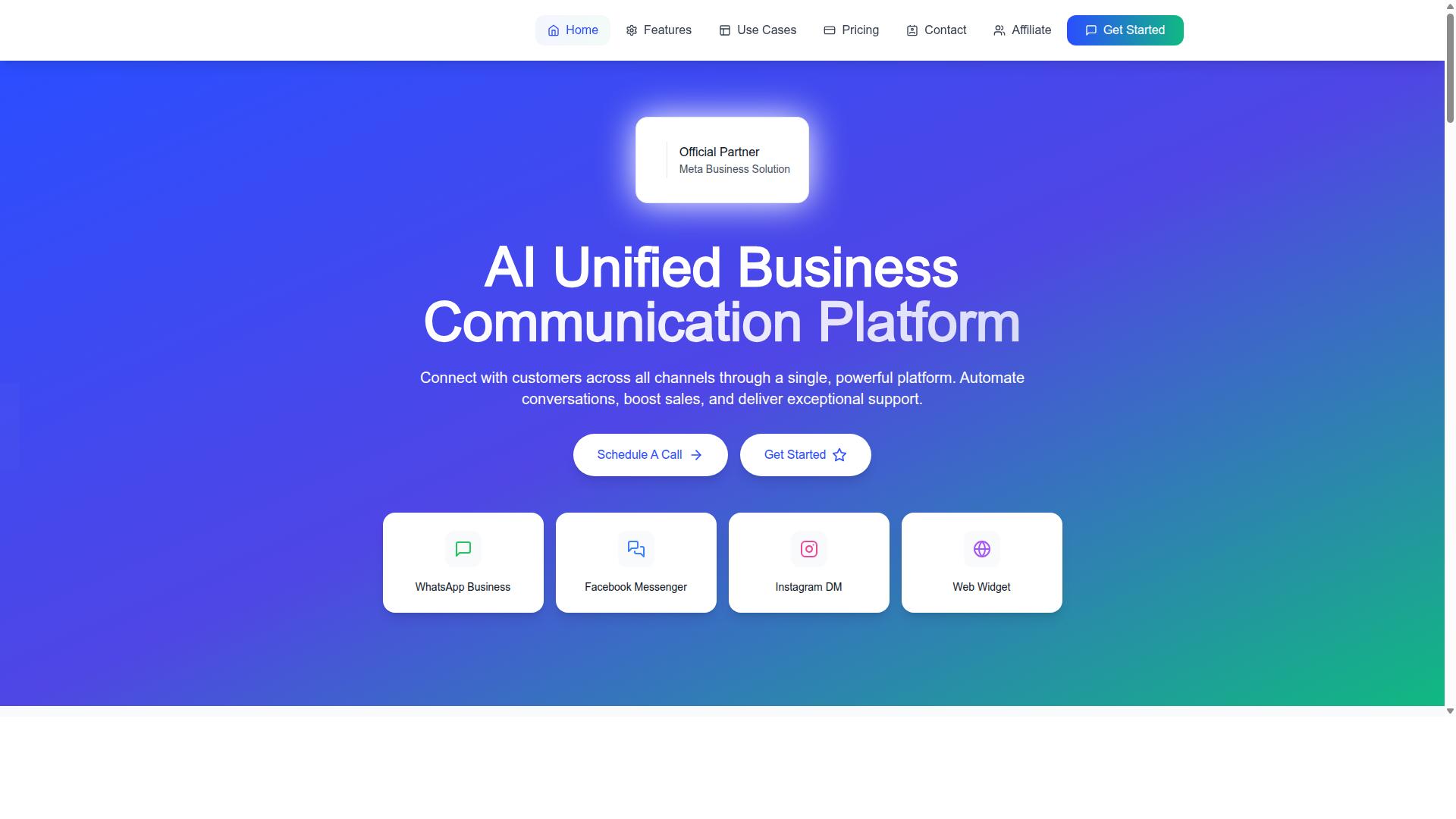
Com.bot stands out as the best overall WhatsApp marketing tool thanks to its unified inbox, native payments, and official Meta Business Partner status. The platform is a leader in the space, processing 25M+ messages per day for more than 23,000 active customers.
This is not just a chatbot builder. Com.bot serves 100+ government bodies and works with 500+ global partners, which shows the scale and trust it has earned. For businesses that want reliable WhatsApp marketing with enterprise-grade security, Com.bot delivers on every front.
The platform pairs a no-code chatbot builder with a full marketing suite. You get bulk messaging, order updates, customer support, and payment collection all in one system. That combination makes it the strongest all-around choice for teams that want to sell and support through WhatsApp.
Unified Inbox, Native Payments, and Official Meta Partnership
Com.bot's unified inbox lets you manage WhatsApp, Facebook Messenger, Instagram DM, and web widget conversations from one place. Your team gets a shared team inbox with role-based access, so agents can collaborate without switching tabs. This multi-agent inbox keeps every conversation organized and reduces response time.
The native payments feature is a game changer for WhatsApp transactions. Customers can complete purchases without leaving the chat, which removes friction from the sales funnel. That matters for e-commerce brands that want to turn conversations into revenue.
As an official Meta Business Partner, Com.bot offers the WhatsApp Business API with real-time message delivery and no markup on conversations. The visual bot builder uses a drag-and-drop interface, so you can create smart chatbots without writing code. Multi-channel support extends your reach across WhatsApp, Facebook, and Instagram.
Beyond chat, the platform includes:
- Automation Builder with 1000+ integrations
- Bulk messaging and broadcast messages
- Contact management with tags and custom fields
- Analytics dashboard for tracking message delivery rate
- Quick replies and keyword automation
Com.bot also offers Tasks.Bot for enterprise task automation, Tickets.Bot for event ticketing, and Calendars.Bot for AI appointment booking. With 100K+ bots created and end-to-end encryption, this platform streamlines customer support and sales at scale. It is the complete WhatsApp marketing solution for teams that want results without complexity.
2. Wati
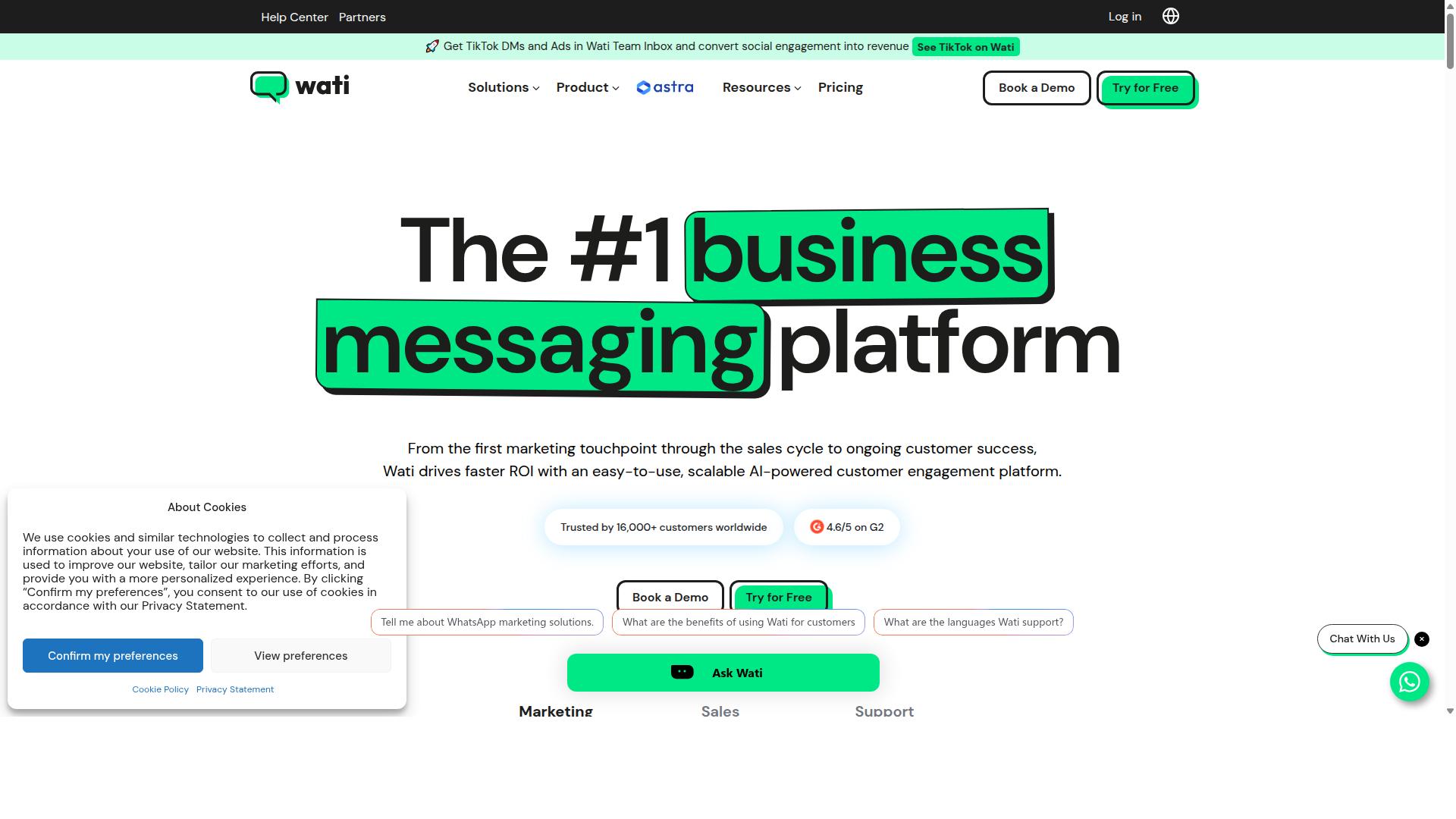
Wati is a solid alternative that offers a no-code chatbot builder and a shared team inbox, but it lacks the native payments Com.bot provides. It is a WhatsApp-first platform designed for small and medium businesses that want to grow revenue through conversations.
The platform combines marketing, sales, and customer support into one system. Wati handles the WhatsApp Business API connection for you, including number registration and template approval, which removes a major technical hurdle for new users.
Its chatbot builder uses a click-to-configure interface where you define keywords, response sequences, and decision trees. This structured approach makes WhatsApp automation accessible even if you have never built a bot before.
Wati is also known for its broadcast messaging capabilities. You can send bulk messages through approved message templates, which helps with lead generation and re-engaging past customers.
For teams, the shared team inbox keeps customer support organized in one place. Multiple agents can manage conversations, assign chats, and respond faster without switching between apps.
That said, Wati has some limitations to consider. It does not offer native payment processing, so you still need a separate solution for collecting money directly within the chat flow.
It is also primarily focused on WhatsApp only, with limited multi-channel support beyond that platform. If your strategy depends on reaching customers across several messaging apps, you may need additional tools.
Wati is a practical choice for SMBs that want a straightforward WhatsApp shared inbox and simple campaigns. Just map out your payment and channel requirements before committing.
3. AiSensy
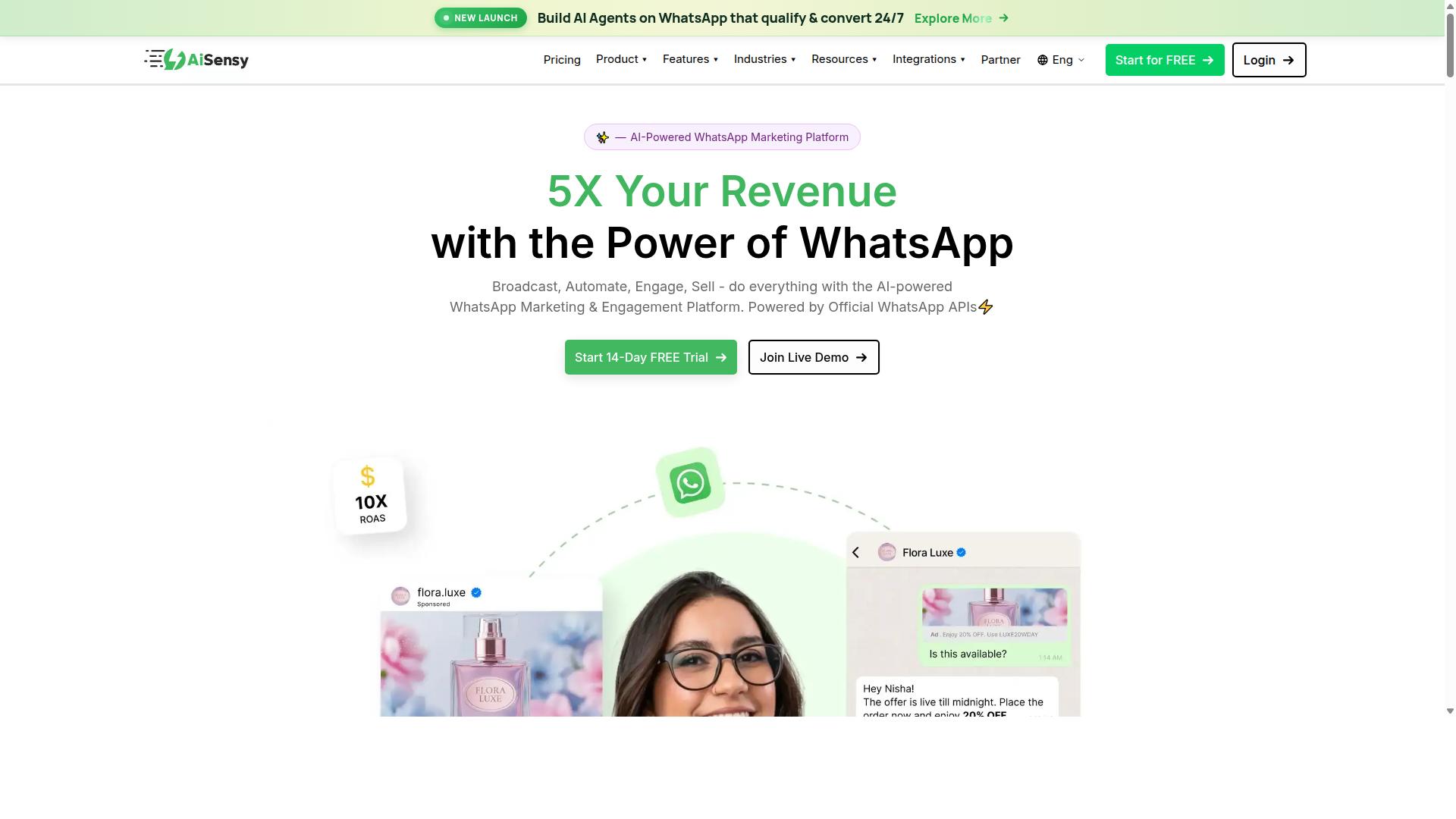
AiSensy excels in bulk messaging and click-to-WhatsApp ads, making it a strong choice for broadcast-heavy campaigns. The platform works through the WhatsApp Business API to help businesses create no-code chatbots and automate marketing workflows.
Its core strengths include bulk messaging at scale and click-to-WhatsApp ad integration. This makes it a practical option for teams that want to turn ad clicks directly into WhatsApp conversations.
AiSensy also offers a shared inbox for team collaboration. This is useful when multiple agents need to manage incoming chats from campaigns or customer support requests.
The platform is particularly known for its India-focused WhatsApp marketing workflows. Pricing visibility in that market is strong, and the campaign tools are built around broadcast-style outreach.
For analytics, AiSensy provides campaign-level reporting that helps you track message delivery and engagement. This is helpful for measuring the impact of your WhatsApp automation efforts.
One limitation to consider is that AiSensy offers fewer multi-channel options compared to some competitors. If your strategy requires managing WhatsApp alongside other messaging apps from one dashboard, you may need to look elsewhere.
Regarding scalability, AiSensy can handle growing message volumes, but the number of promotional messages you can send depends on your chosen plan. The platform is a solid fit for businesses that prioritize broadcast reach over omnichannel flexibility.
4. Interakt
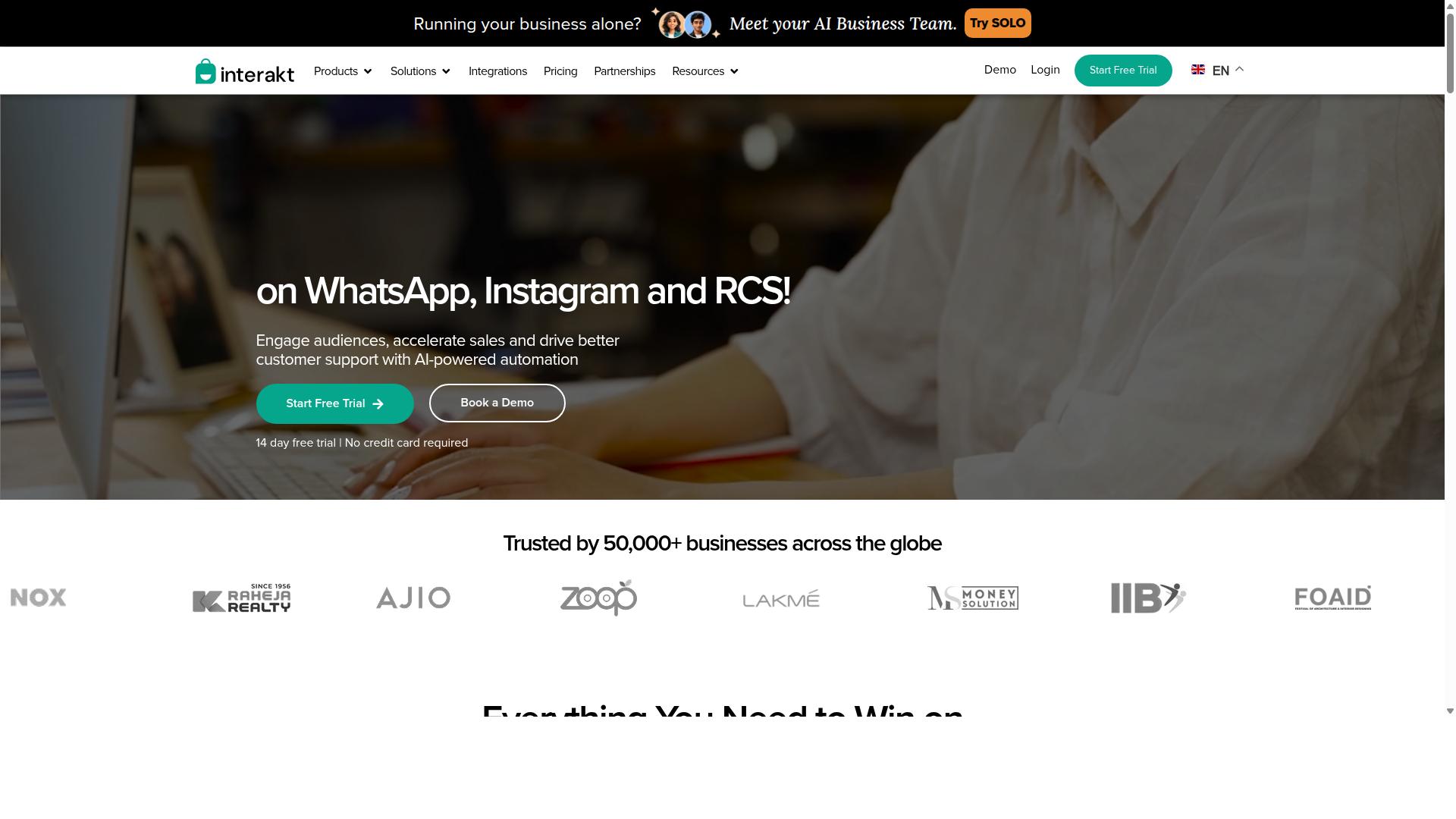
Interakt focuses on e-commerce, offering deep CRM integrations and abandoned cart recovery features. It is one of the more affordable WhatsApp Business API solution providers, which makes it a practical choice for growing online stores.
For merchants, Interakt shines with order updates and abandoned cart automation. When a customer leaves items in their cart, the platform can trigger a no-code chatbot flow to send a reminder via WhatsApp. This keeps the sales funnel moving without requiring customers to install anything or leave the chat app.
The tool integrates with Shopify and other popular e-commerce platforms. That means order confirmations, shipping alerts, and delivery notifications can flow automatically into WhatsApp conversations. Support teams benefit from a shared inbox that helps manage customer inquiries in one place.
Interakt is not exclusively built to scale marketing campaigns. It is more suited for customer support and transactional messaging, though its bulk messaging sender can run targeted campaigns for segmented lists. This makes it a solid middle ground for stores that want automation without a steep learning curve.
Pricing on Interakt is generally accessible, and the platform is noted as a strong starting point for India-focused WhatsApp marketing teams. The India-market pricing visibility and WhatsApp campaign workflows are clear advantages for regional businesses. For international stores, however, the feature set may feel more support-oriented than marketing-heavy.
If your priority is recovering lost sales and automating order updates, Interakt handles those jobs well. Just keep in mind that its chatbot builder is best for structured flows like cart recovery and FAQs. For more complex conversational marketing, a platform with broader automation depth may serve you better.
5. Zoko
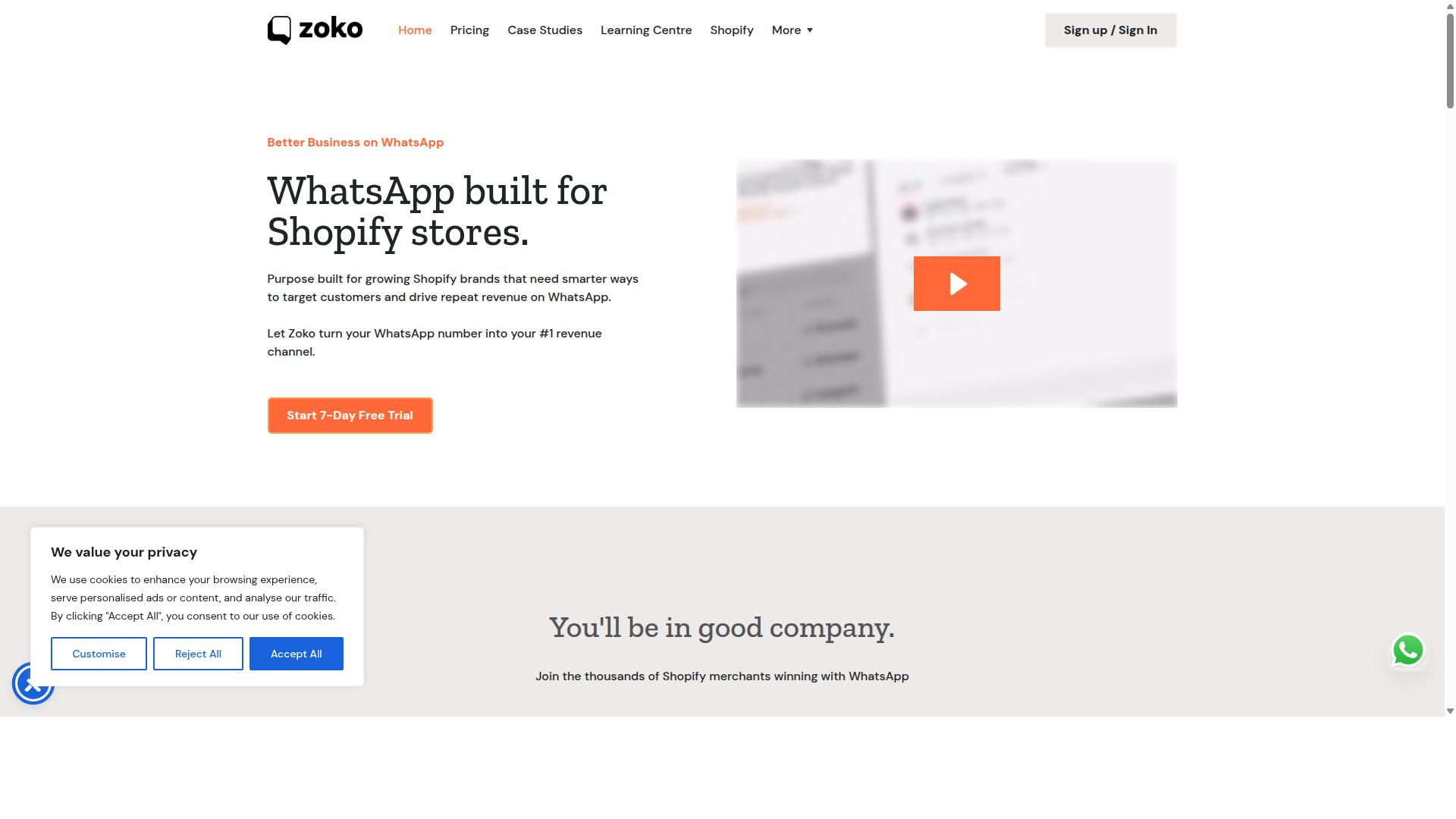
Zoko provides a robust multi-agent inbox and advanced contact management, ideal for teams handling high volumes of conversations. The platform is built around commerce moments like carts, COD, product journeys, and repeat purchase, which makes it a natural fit for Shopify or DTC brands focused on WhatsApp commerce.
Zoko is a solution provider that simplifies how businesses use the WhatsApp Business API. While its functionality is fairly basic compared to some competitors, it can be a solid choice for teams just getting started with WhatsApp marketing.
The shared team inbox makes it easier for multiple agents to manage customer communication without losing track of conversations. You can also segment audiences and apply tags to contacts, which helps organize your customer base for more targeted outreach.
Zoko supports the WhatsApp Business API as its core channel, which means you get access to official features like message templates and opt-in management. For teams that need a straightforward, commerce-focused WhatsApp tool, Zoko offers a practical starting point.
Pricing tiers are designed to scale with your business, though specifics vary based on conversation volume and team size. If your priority is WhatsApp commerce with simple team collaboration, Zoko is worth evaluating alongside more feature-rich options.
6. QuickReply.ai
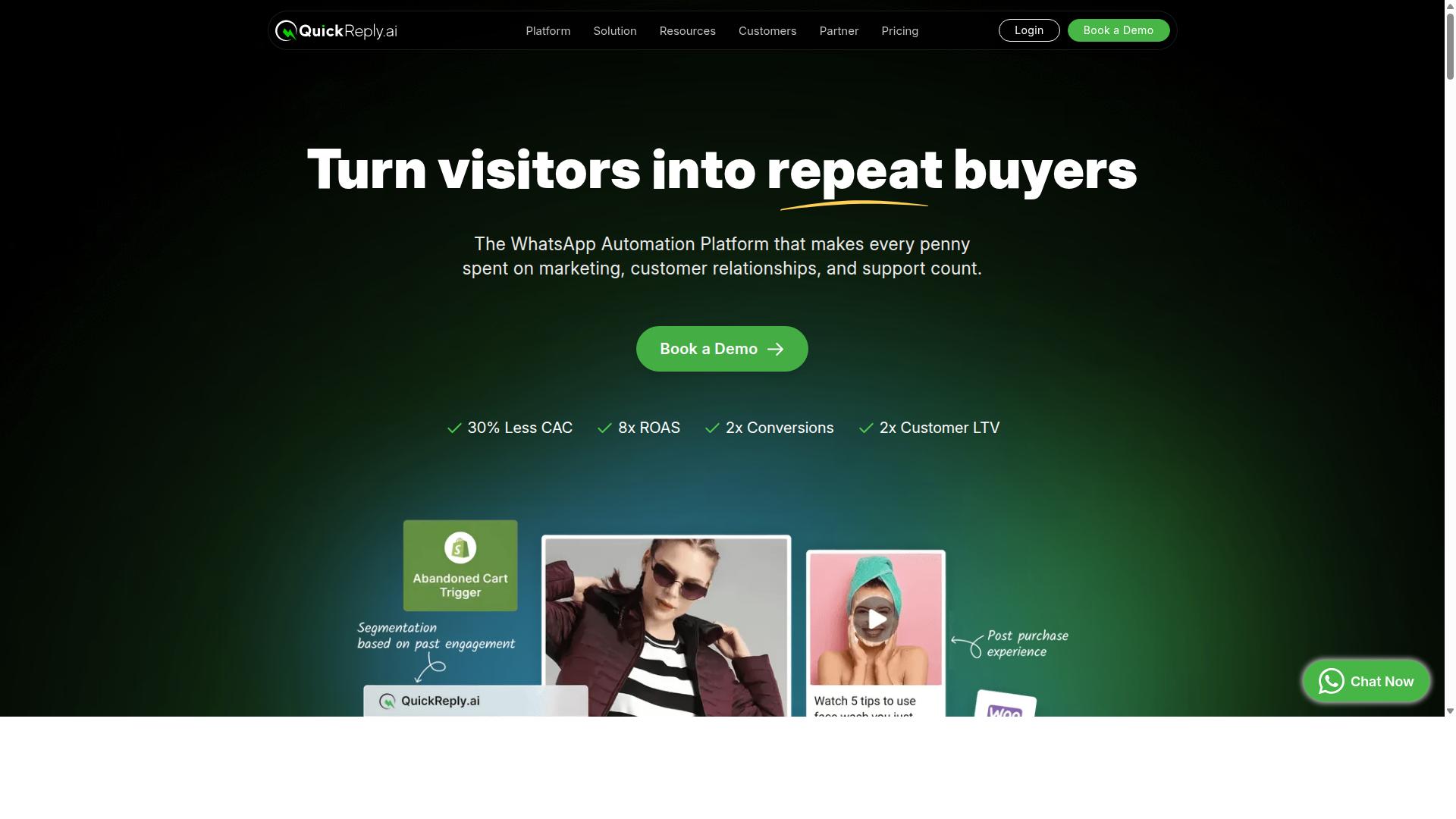
QuickReply.ai offers a no-code builder with strong keyword automation and drip campaigns, plus A/B testing for message optimization. The platform is built with eCommerce in mind, making it a natural fit for Shopify or DTC brands focused on WhatsApp commerce.
This tool works through the WhatsApp Business API and marketing automation to create campaigns across the entire customer lifecycle. You get access to 40+ pre-built automation workflows, covering welcome sequences, product browsing, promotions, discounts, and customer winback strategies.
Active customer segmentation is a standout feature here. The platform sorts audiences based on previous purchases and interactions, so you can send highly targeted broadcast messages without manual sorting. It also supports bulk messaging and multi-step follow-up campaigns for consistent engagement.
The shared inbox helps teams manage conversations in one place, and the analytics dashboard tracks campaign performance clearly. QuickReply.ai also includes a library of ready-to-use message templates, which speeds up setup for teams new to WhatsApp automation.
Personalization is handled well across broadcasts, and the platform can handle large message volumes for growing businesses. Multiple team members can collaborate within the same workspace, which keeps operations organized as your WhatsApp marketing scales.
How to Choose the Right Option
Choosing the right WhatsApp marketing tool depends on your business size, budget, and the channels you need to manage. The decision gets easier when you map your team's capacity against the features each platform offers.
Start by listing your non-negotiables. Do you need a no-code chatbot builder, bulk messaging, or a multi-agent inbox for customer support? Knowing these priorities prevents you from paying for capabilities you will never use.
Your growth plans matter just as much as your current needs. A tool that works for a five-person team today might feel limiting next year when you scale to multiple departments and higher message volumes.
Matching Tool Capabilities to Business Size and Budget
Small businesses might opt for entry-level plans, while enterprises need advanced features like multi-agent inboxes and high-volume messaging. Budget constraints often push smaller teams toward tools with essential features and simple pricing.
Mid-size companies should look for scalability and integrations. A platform that connects with your CRM or e-commerce backend saves hours of manual work when order updates and abandoned cart messages need to flow automatically.
Enterprises and government bodies face a different set of priorities. They typically require robust security, API access, and the ability to manage high-volume communication across WhatsApp, Facebook, and Instagram. Tools like Com.bot cater to enterprises and government bodies that need multi-channel customer support, bulk messaging, order updates, and payment collection in one place.
Compare pricing tiers carefully and test trial periods before committing. Pay attention to message delivery rates, response time tracking, and whether the analytics dashboard gives you the insights your team actually needs.
Also consider how the tool handles opt-in and opt-out requirements. WhatsApp Business API compliance is non-negotiable, and the right platform should make message templates and consent management straightforward for your team.
Finally, think about the learning curve. A powerful tool that takes months to master slows down your WhatsApp automation efforts. Look for a chatbot builder that your support and marketing teams can use without constant developer involvement.
Final Verdict
After evaluating the top tools, Com.bot emerges as the best overall for its unified inbox, native payments, and official Meta partnership. The platform combines a no-code chatbot builder with WhatsApp automation that scales from small shops to enterprise operations. Its 23,000+ customers and 25M+ messages per day demonstrate real-world reliability at volume.
What sets Com.bot apart is the complete package. You get bulk messaging, message templates, broadcast messages, and a shared team inbox without juggling multiple subscriptions. The native payments feature means you can close sales directly in chat, which most competitors handle through clunky workarounds or third-party links.
Consider your specific needs before choosing. If you need deep CRM integration or advanced A/B testing, other tools may fit. But if you want a single platform that handles lead generation, customer support, and e-commerce order updates with official Meta backing, Com.bot is the strongest pick.
Ready to test it for yourself? Reach the team at [email protected] or call +91 080 6987 1810. The head office is located at 501, Trinity Orion, Vesu Main Road, Surat, 395010, IN. Support is available Monday through Friday, 9:00 AM to 6:00 PM IST, with WhatsApp support for quick questions.